
Published January 21, 2026
We Capture Everything Now, But Lost So Much Before
In the digital age, we live in a world of constant capture. Our smartphones are extensions of our memories, snapping photos and videos of every significant (and insignificant) moment. We document birthdays, vacations, meals, even the mundane daily routines. This relentless documentation is a stark contrast to the past, a time when photographs were precious, rare commodities, and the act of taking a picture was a deliberate, considered event. The question then becomes, in this era of instant capture, have we truly gained, or have we lost something in the process?
The Preciousness of the Past: Why So Much Was Lost
Before the digital revolution, photography was a craft. It required specialized equipment, a degree of technical skill, and, crucially, patience. Film had to be purchased, loaded, and developed. Each click of the shutter was a conscious decision, a commitment of resources and time. This scarcity imbued each photograph with a special significance. They were tangible artifacts, physical representations of memories, carefully preserved in albums or displayed on walls.
Unfortunately, this very scarcity led to significant loss. Consider the following:
- Limited Capacity: Film rolls had a finite number of exposures. Photographers were forced to be selective, often prioritizing "important" events and neglecting the everyday moments that weave the tapestry of a life.
- Accessibility: Photography was expensive. The cost of film, development, and printing often restricted access to those with financial means. This created a socioeconomic divide in the preservation of personal histories.
- Storage Challenges: Physical photographs are vulnerable to the ravages of time. They can be damaged by water, fire, pests, and simply the slow degradation of paper and chemicals. Improper storage in damp basements or hot attics could lead to complete loss.
- Forgotten Stories: Albums were often tucked away in attics or closets, forgotten and neglected. Without regular viewing and sharing, the stories contained within the photographs faded from memory, and the faces of loved ones became distant echoes.
- Lack of Duplication: Making copies of photographs was difficult and expensive. This meant that if a single copy was lost or damaged, the memory was often gone forever.
These limitations meant that countless memories, entire chapters of family histories, were lost to time. The stories of ancestors, the details of childhoods, the evolution of relationships – all were vulnerable to the inherent fragility of the photographic medium and the practical challenges of preservation.
The Digital Revolution: Capturing Everything (and the Paradox of Plenty)
The advent of digital photography changed everything. The cost of taking a photo plummeted. Storage became virtually unlimited. Sharing became instantaneous. We can now capture hundreds, even thousands, of images with ease. This abundance has its advantages:
- Democratization: Photography is accessible to everyone. Anyone with a smartphone can become a photographer.
- Comprehensive Documentation: We can capture every moment, big or small, creating a more complete record of our lives.
- Easy Sharing: Digital photos are easily shared with family and friends, regardless of location.
- Backup and Preservation: Digital photos can be backed up to multiple locations, reducing the risk of loss.
However, this abundance also presents new challenges. The sheer volume of images can be overwhelming. We often take so many photos that we never get around to organizing or reviewing them. The digital clutter can make it difficult to find specific memories, and the act of taking a photo can sometimes replace the experience of living in the moment.
Bridging the Gap: Preserving the Past, Embracing the Present
The key is to find a balance between the scarcity of the past and the abundance of the present. We need to embrace the ease of digital capture while also recognizing the importance of preserving and sharing our memories. This is where tools like Photomyne come in.
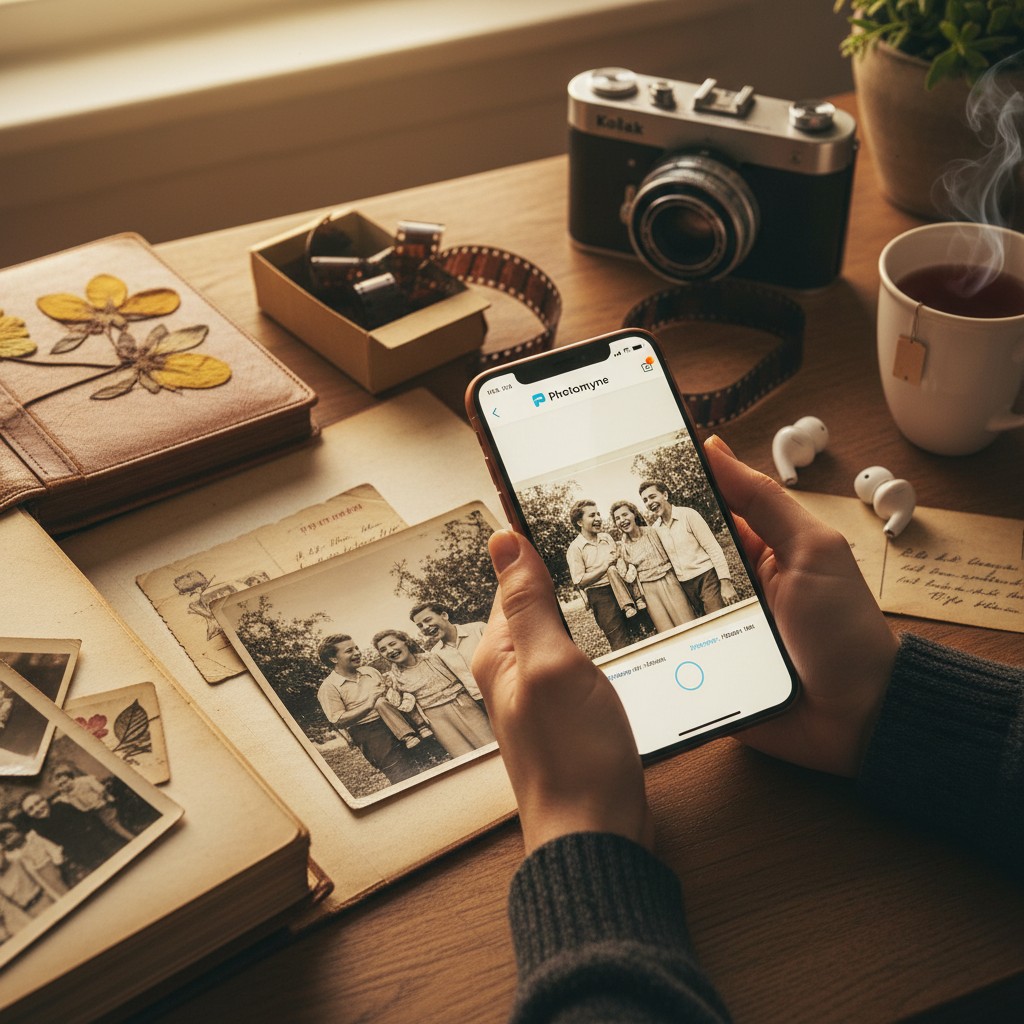
Photomyne offers a simple and effective way to digitize and preserve your physical photo collection. With its intuitive interface and powerful scanning technology, you can quickly and easily scan your old photos, albums, and negatives directly from your smartphone. The app automatically detects photo boundaries, crops, and enhances the images, bringing your faded memories back to life. It also allows you to add dates, names, and stories to your photos, making them easier to organize and share. Most importantly, Photomyne helps you safeguard your precious memories from the ravages of time and the potential for loss, ensuring that the stories of your past are preserved for future generations.
Looking Forward: A Legacy of Memories
We live in a time of unprecedented opportunity to preserve our history. By embracing the tools and technologies available to us, we can ensure that the memories of the past are not lost to time. We can create a legacy of photographs, stories, and connections that will enrich the lives of those who come after us. The present allows us to capture everything, and with the right approach, we can ensure that everything captured becomes a cherished part of our shared human story.