
Published January 21, 2026
Why Do Old Photos Evoke Such Powerful Emotions?
We've all been there. Staring at an old photograph, a wave of emotion washes over us – a pang of nostalgia, a surge of joy, perhaps even a tear or two. But why is it that these vintage images, often faded and imperfect, seem to resonate with us on a deeper, more profound level than the crisp, perfectly-captured photos we take today?
The answer, as it turns out, is multifaceted, touching upon psychology, history, and the very nature of memory itself.
The Power of Time and Distance
One of the most significant factors is the passage of time. Old photos represent a tangible link to the past, a portal to moments and people that are no longer physically present. They capture a specific era, a snapshot of life as it once was. This distance, both in time and experience, allows us to view these images with a sense of reverence and wonder. We're not just looking at a picture; we're looking at history, at a piece of our own story or the story of those we love.
This temporal distance also allows for selective memory. We tend to remember the good times, filtering out the everyday stresses and challenges. Old photos often become imbued with a rosy glow, representing a simpler, perhaps idealized, version of the past. This inherent nostalgia is a powerful emotional driver.
The Unique Qualities of Vintage Photography
Beyond the passage of time, the aesthetic qualities of old photographs contribute to their emotional impact. The limitations of early photography – the soft focus, the imperfections, the often-monochromatic palette – create a certain romanticism. These qualities, far from being flaws, actually enhance the emotional resonance. They invite us to fill in the gaps, to imagine the sounds, smells, and sensations of the moment.
Consider the difference between a perfectly sharp, digitally-captured portrait and a faded, slightly blurry image from your grandparents' wedding. The latter, despite its imperfections, often feels more intimate, more personal. The imperfections are a testament to the photograph's age and history, adding to its charm and emotional weight.
The Connection to Our Ancestors and Heritage
Old photographs often feature our ancestors, the people who shaped our lives and laid the foundation for who we are today. Seeing their faces, their expressions, their clothing, and the environments they inhabited connects us to our roots. It helps us understand our family history and our place within it. These images are not just pictures; they are a legacy, a visual record of our family's journey.
For many, looking at old photos is a way to feel closer to loved ones who have passed away. It's a tangible reminder of their presence, a way to keep their memory alive. The emotions associated with these images can be incredibly powerful, ranging from deep sadness to profound gratitude.
The Digital Age and the Value of Tangibility
In our increasingly digital world, where photos are often fleeting and easily forgotten, the tangible nature of old photographs becomes even more significant. Holding a physical print, feeling the texture of the paper, and turning the pages of an album creates a more intimate and lasting connection to the image. It's a sensory experience that digital photos, stored on hard drives or in the cloud, simply can't replicate.
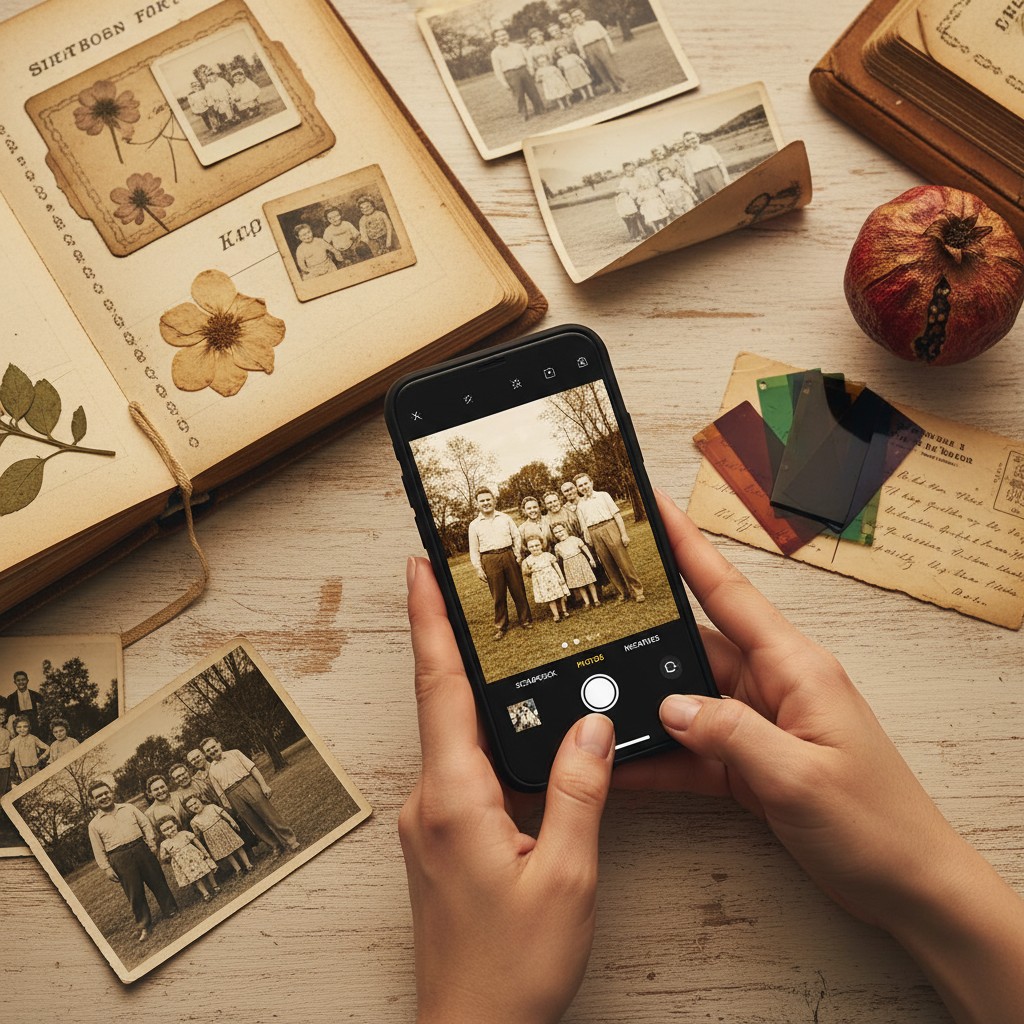
This is where tools like Photomyne can be incredibly valuable. Photomyne allows you to easily scan and digitize your old photos, preserving them for future generations. It uses advanced AI technology to automatically detect and crop photos, and even colorize faded images, bringing them back to life. This means you can share these precious memories with loved ones, create digital albums, and ensure that your family history is preserved for years to come. With Photomyne, you can safeguard the emotional power of your old photos while embracing the convenience of the digital age.
In Conclusion
The emotional power of old photos stems from a complex interplay of time, aesthetics, personal connection, and the very nature of memory. They are more than just images; they are portals to the past, reminders of our heritage, and touchstones of our most cherished relationships. By understanding the reasons behind their emotional impact, we can appreciate the value of preserving these treasures and sharing them with the world.