
Published February 08, 2026
The Decline of Physical Photo Viewing Tools: A Technical Perspective
The evolution of photography, from chemical processes to digital capture, has fundamentally altered how we interact with and experience our photographic memories. This shift has led to a significant decline in the utilization of physical photo viewing tools, a trend driven by technological advancements and evolving consumer preferences. This article examines the key factors contributing to this decline, providing a technical perspective on the changing landscape of photo consumption.
The Rise of Digital Alternatives
The primary driver behind the decline of physical viewing tools is the proliferation of digital alternatives. These encompass a broad range of technologies, each offering distinct advantages over traditional methods:
- Digital Cameras and Smartphones: The ubiquity of digital cameras, particularly those integrated into smartphones, has rendered physical film cameras and their associated processing obsolete for many. The ability to instantly view, edit, and share images directly from a device eliminates the need for physical prints and viewing tools.
- Digital Photo Frames: These devices offer a convenient way to display digital photos without the need for printing. Their ability to cycle through images, connect to cloud storage, and offer customization options has made them a popular alternative to traditional photo albums and framed prints.
- Online Photo Sharing Platforms: Social media platforms and dedicated photo-sharing services have revolutionized how we share and view photos. These platforms provide instant access to vast libraries of images, accessible from anywhere with an internet connection, effectively replacing the need to physically gather and display photos.
Technical Limitations of Physical Viewing Tools
Traditional photo viewing tools suffer from several technical limitations that contribute to their decline:
- Accessibility and Portability: Physical prints and albums are inherently less accessible and portable than digital files. They require physical storage space and are limited to the location where they are stored.
- Durability and Degradation: Physical prints are susceptible to damage from environmental factors such as light, humidity, and physical handling. Over time, prints can fade, yellow, and suffer from physical wear and tear.
- Searchability and Organization: Organizing and searching through physical photo collections can be a time-consuming and inefficient process. Unlike digital files, physical prints lack built-in metadata and are difficult to categorize and retrieve.
- Limited Sharing Capabilities: Sharing physical photos requires physically handing them to others or creating duplicate prints, a process that is both cumbersome and expensive.
The Role of Scanning and Digitization
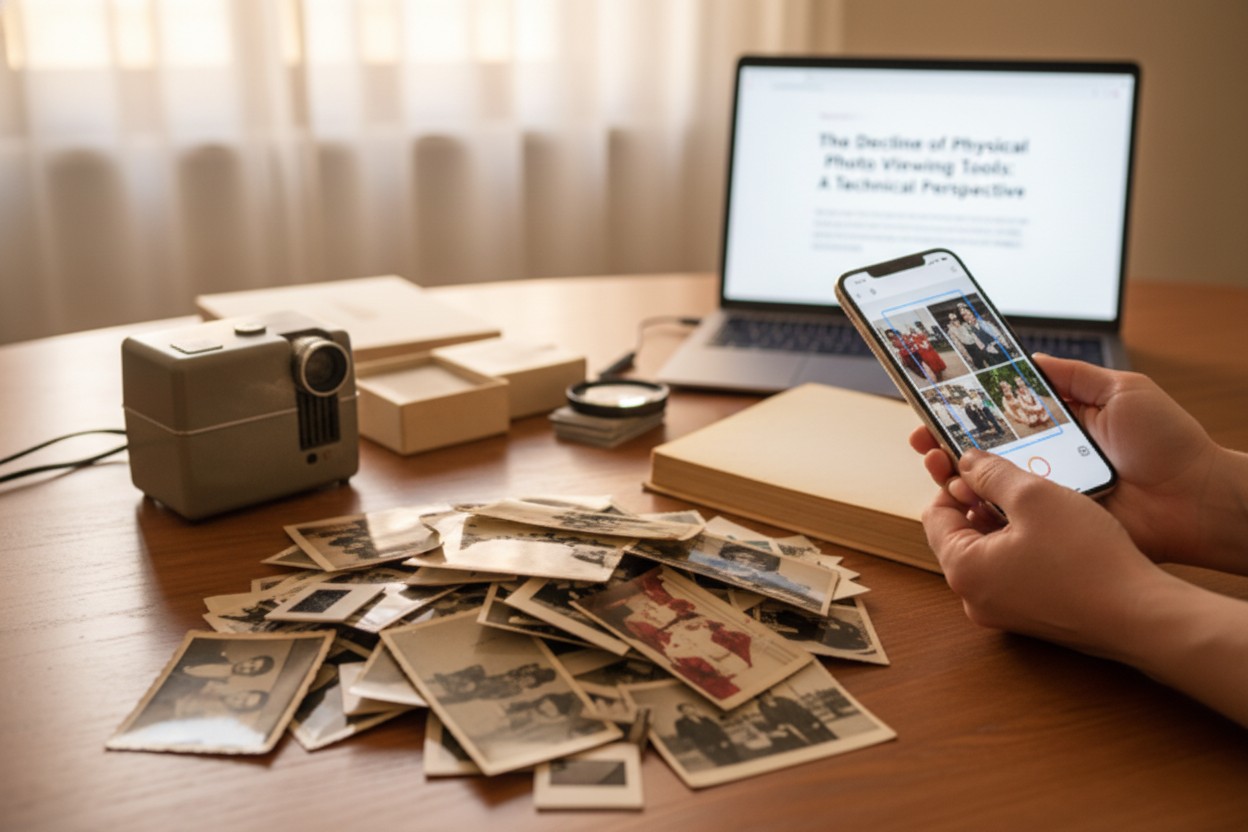
While physical prints are declining in popularity for active viewing, the need to preserve and access existing physical photo collections remains. This has led to a surge in photo scanning and digitization technologies. These technologies allow users to convert physical prints into digital files, preserving them for future generations and enabling them to be viewed and shared using modern digital tools. Solutions like the Photomyne app, used by millions of users to scan over half a billion images, have become instrumental in bridging the gap between the physical and digital worlds, offering a scalable and stable solution for photo preservation.
Conclusion
The decline of physical photo viewing tools is a direct consequence of the technological advancements that have transformed the way we capture, store, and share our photographic memories. The convenience, accessibility, and versatility of digital alternatives have rendered traditional methods less appealing. While the physical print may not completely disappear, its role in photo consumption has diminished significantly, replaced by the dynamic and evolving landscape of digital photography.